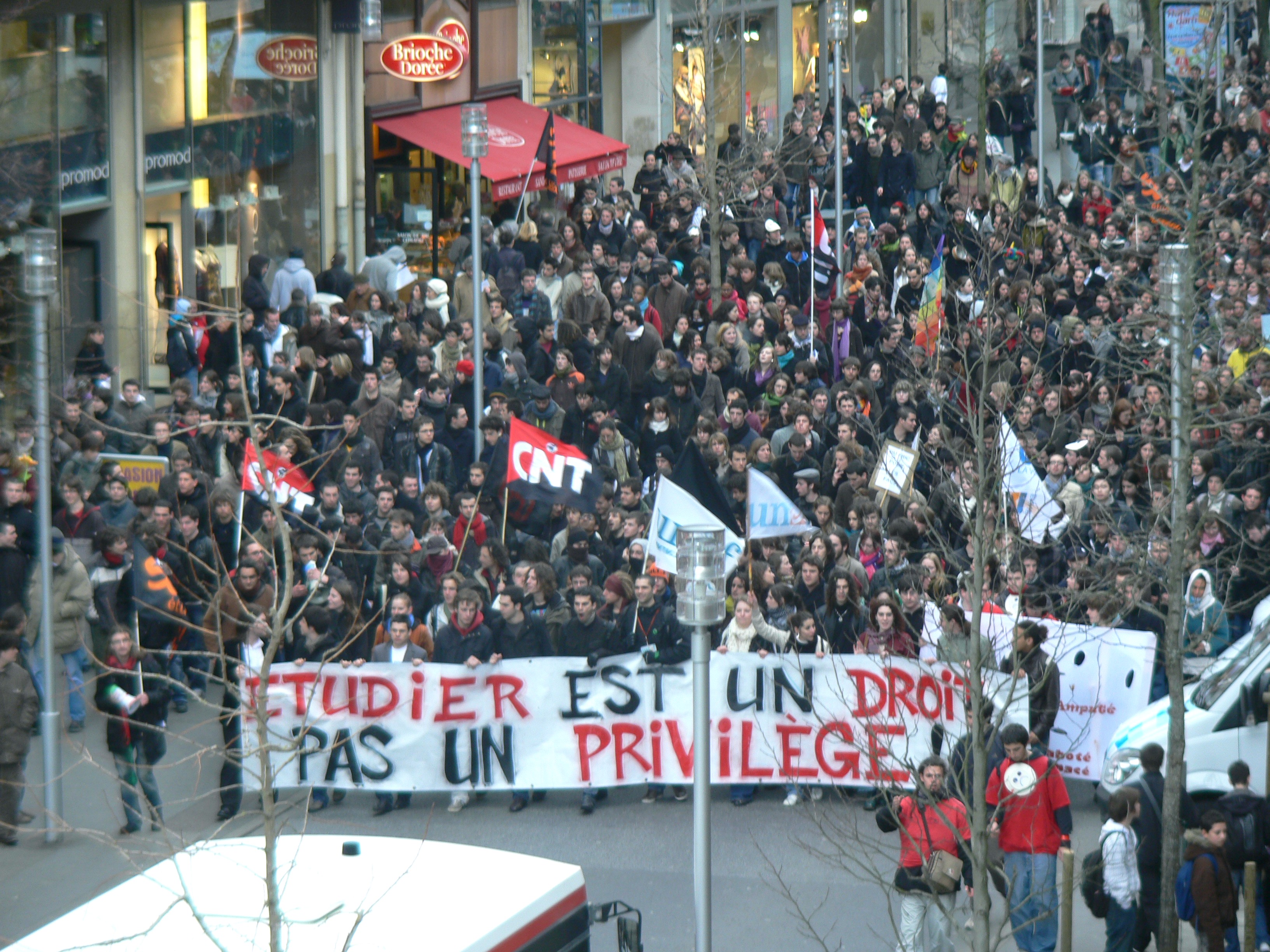
Higher education should be made equally accessible to all by every appropriate means, especially by the progressive introduction of free education. Despite this provision, worldwide public expenditures have declined and private sources account on average for around one-third of expenditure on tertiary educational institutions According to the OECD’s Education at a Glance report (2020), between 2015 and 2017 public expenditure on tertiary education as a share of GDP decreased on average by 5.1% across OECD countries with Chile, the United Kingdom, the United States and Australia representing the countries with most private investments in higher education.
Total expenditure on educational institutions as a percentage of GDP, by source of funds (2017)
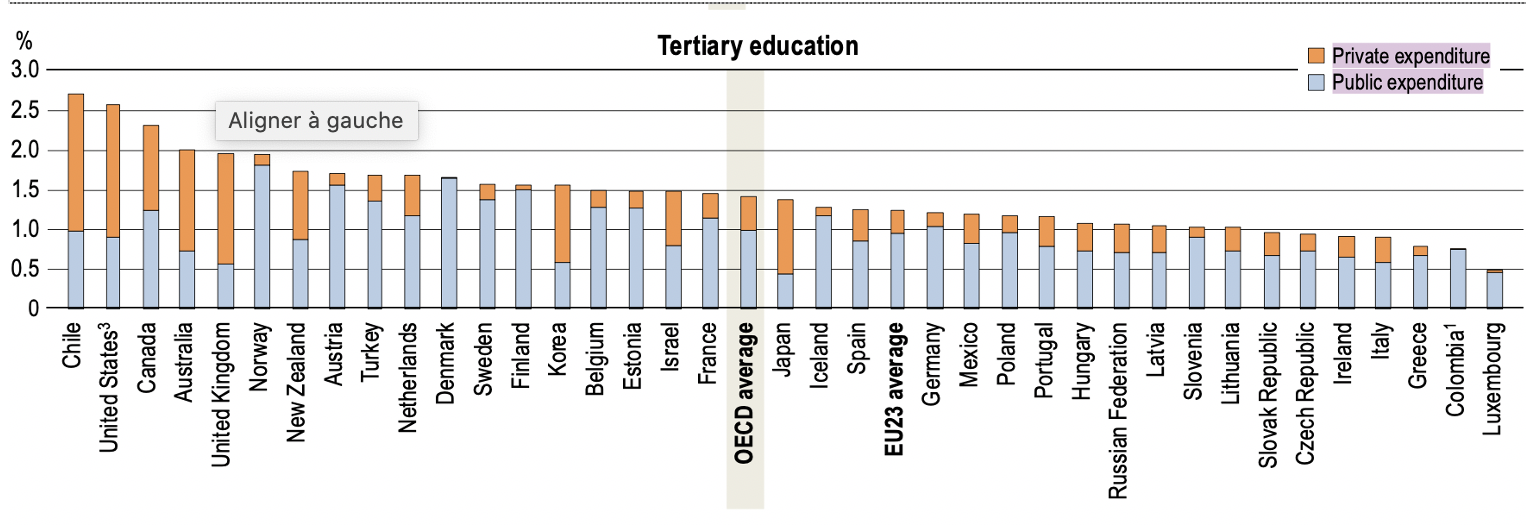
Source: OECD, Education at a Glance, 2020.
In the Latin America and the Caribbean region, it is the private sector that has impulsed the rapid expansion of higher education in the 2000’s: the market share of private higher education institutions in the region rose from 43 percent to 50 percent between the early 2000s and 2013; with Brazil, Mexico and Argentina being the countries with the most important raise in numbers of private higher education institutions.
Change in the Number of Public and Private HEIs, Latina America and the Caribbean, Circa 2000-13
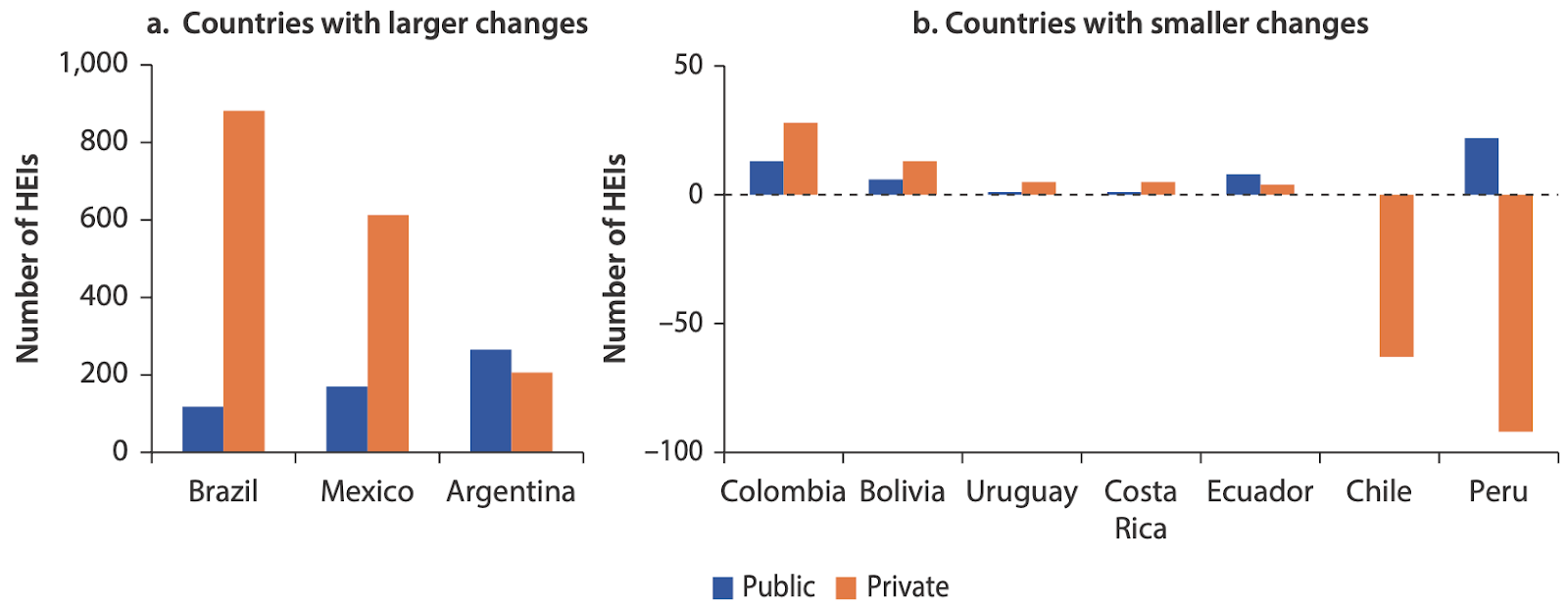
Source: World Bank, At a Crossroads : Higher Education in Latin America and the Caribbean, 2017.
Budget allocation to funding higher education is a political decision. Because of increased pressure to reduce taxes and alleviate the cost of public budgets, more and more countries are shifting the burden of higher education costs from the government to students. Higher education is increasingly seen as an investment leading to private and public yields but not necessarily as a social priority. Funding politics are then designed to target sectors of higher education showing the higher rates of return with for example a selective system of scholarship.
Simultaneously, efforts to decentralize the public management of higher education pushed the development of private schools. The Institute For Higher Education Policy has highlighted the fact that privatization pushes institutions to operate in a market-oriented manner to respond to consumer demands, sometimes threatening traditional academic culture and even quality of education. Moreover, privatization of higher education leads to increasing costs while according to international law, it should be progressively free. The cost of higher education varies a lot between countries : while free in 40 countries worldwide such as Germany or Brazil, it can be around several hundred dollars in Belgium, Columbia or France and goes up to thousands of dollars in the United States where the average 2016 college graduate student loan debt amounts to of 37 000$.
Increasing costs of access to higher education forces a rising number of students to rely on loans. The burden of student loan debt is challenging both developed and developing countries. While governments are accumulating unprecedented levels of total federal student loan debt (nearly $1,3 trillion in the US in 2019, nearly $100 billion in the UK in 2017), students carry the cost of debt for years and many default on repayment (US : 14% of the 7 million borrowers are in default). In the US the student debt increased by 107% in a decade.
Visit our webpage on the privatization of education for more information about this issue.