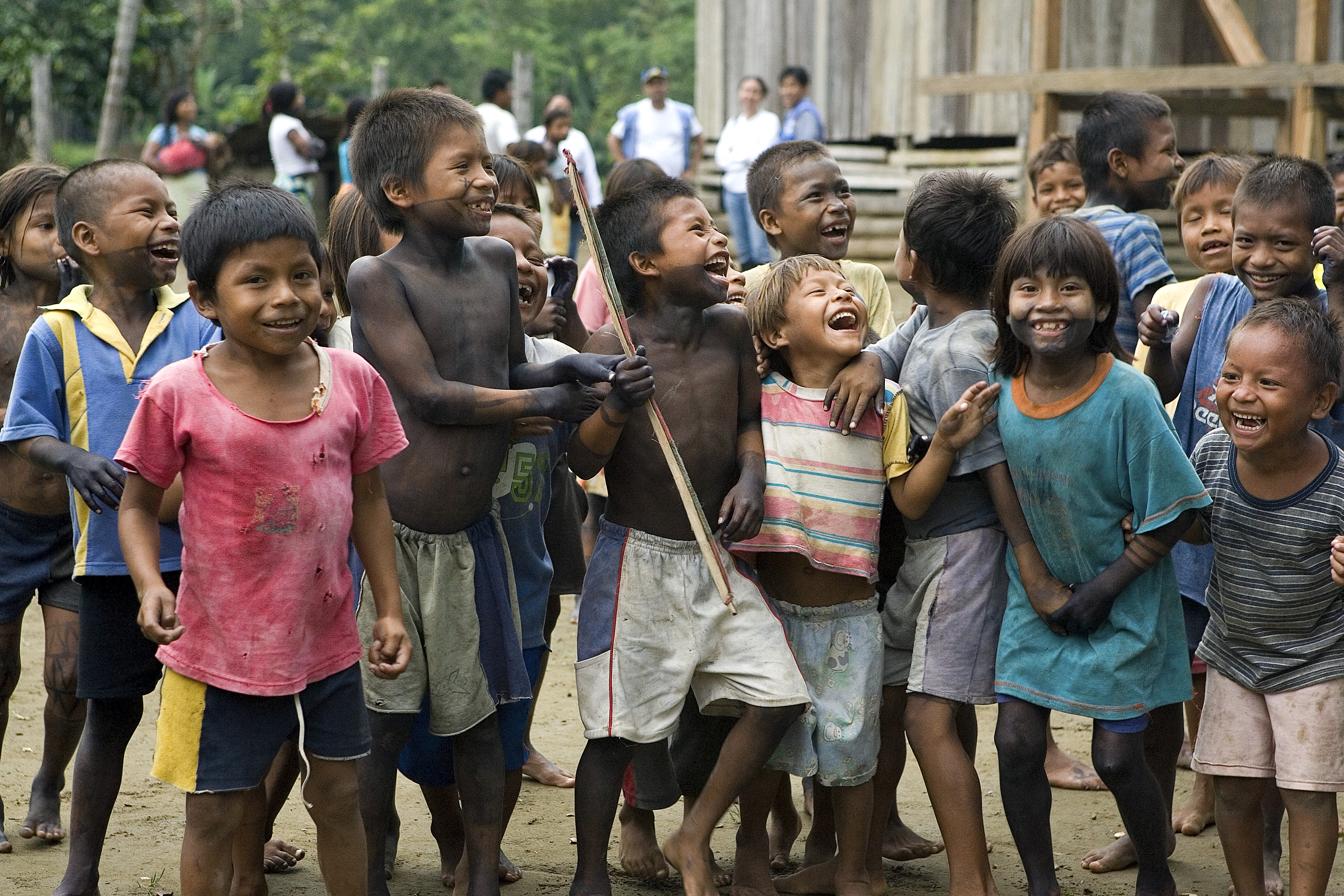
Minorities and Indigenous Peoples often speak languages that differ from that of the majority or official language. As such, when minority and indigenous students are taught in a language that is not their mother tongue, evidence suggests that they are disadvantaged and their educational development is adversely affected. (See Magga et al. Indigenous Children’s Education and Indigenous Languages; see also articles by Tove Skutnabb Kangas.)
There is also evidence to suggest that minority and indigenous children may be deterred from enrolling in schools and are more likely to drop-out because the minority language is not used as a vehicle of teaching. It is therefore unsurprising that illiteracy is typically much more prevalent among minority and indigenous communities than the majority population.
The right to learn one’s mother tongue (whether it is the language of instruction or as a subject) is not just an issue affecting individuals, it affects whole groups. Language serves as the primary medium through which customs, values, culture as well as the language itself are transmitted from generation to generation.
It is important to note that mother tongue instruction does not necessarily mean that minority and indigenous students should not have the opportunity to learn and attain fluency in the dominant language. In fact, it is desirable that students become multilingual, enabling them to enjoy the benefits of mainstream education, and access to work, as well as maintain their linguistic heritage. Where the indigenous language is not being transmitted, language revitalisation programmes could be incorporated into the education system. (See UNDRIP Article 13; see also Inter-Agency Support Group on Indigenous Peoples’ Issues Education and Indigenous Peoples: Priorities for Inclusive Education, 2014)
International law is somewhat unclear on language rights in education (although human rights provisions should be read in light of each other, so the right to participate in decisions affecting minorities and Indigenous Peoples and the right to the promotion and protection of culture and identity may require schooling in the mother tongue, as vehicle and subject). The strongest legal protections exist in the two Council of Europe treaties:
Article 8 requires states to undertake to make available, in relevant territories and at all levels of education, education in the relevant minority language, a substantial part of education in the relevant minority language or provide for the teaching of the relevant minority language. If a sufficient number of students request minority language education, states should apply at least one of the above measures.
Article 14 recognises that: 'every persons belonging to a national minority has the right to learn his or her minority language'. Article 14 goes on to stipulate: 'In areas inhabited by persons belonging to national minorities traditionally or in substantial numbers, if there is sufficient demand, the Parties shall endeavour to ensure, as far as possible and within the framework of their education systems, that persons belonging to those minorities have adequate opportunities for being taught the minority language or for receiving instruction in this language.'
At the international level, there are two treaties that guarantee language rights in education:
Article 28 states that indigenous children 'wherever practicable, be taught to read and write in their own indigenous language or in the language most commonly used by the group to which they belong. When this is not practicable, the competent authorities shall undertake consultations with these peoples with a view to the adoption of measures to achieve this objective.'
However, this convention only applies to Indigenous Peoples and the number of ratifications is low (22 at present).
Article 5 provides: 'It is essential to recognise the right of members of national minorities to carry on their own educational activities, including the maintenance of schools and, depending on the educational policy of each state, the use or the teaching of their own language.'
Soft law provides strong standard setting on the issue of language rights in education, however both declarations are not legally binding:
Article 14 states: 'Indigenous Peoples have the right to establish and control their educational systems and institutions providing education in their own languages, in a manner appropriate to their cultural methods of teaching and learning.
'States shall, in conjunction with indigenous peoples, take effective measures, in order for indigenous individuals, particularly children, including those living outside their communities, to have access, when possible, to an education in their own culture and provided in their own language.'
Article 4 says: 'States should take appropriate measures so that, wherever possible, persons belonging to minorities may have adequate opportunities to learn their mother tongue or to have instruction in their mother tongue.'
Assimilation; non-mother tongue instruction; the lack of adaptable education relevant to the student’s context and needs, in some cases may not be directly due to state policies but rather the lack of minority and indigenous teachers, the lack of teachers trained to deliver minority or indigenous language instruction, and the lack of adequate teaching materials. In these cases, it is the state’s inaction and failure to implement positive measures to ensure quality education for all.
For instance, Article 27, ILO Convention 169 (1989) requires that states provide adequate resources so that indigenous persons can establish educational institutions. Article 8, European Charter for Regional or Minority Language (1992) requires that teachers be provided with training in order to teach minority languages, as does Article 12 of the Framework (1995), which also guarantees access to textbooks.
For further reading on language rights, see Fernand de Varennes’s Academia.edu page for a list of relevant papers, as well as his article in the INTERIGHTS Bulletin Language Rights in Education.