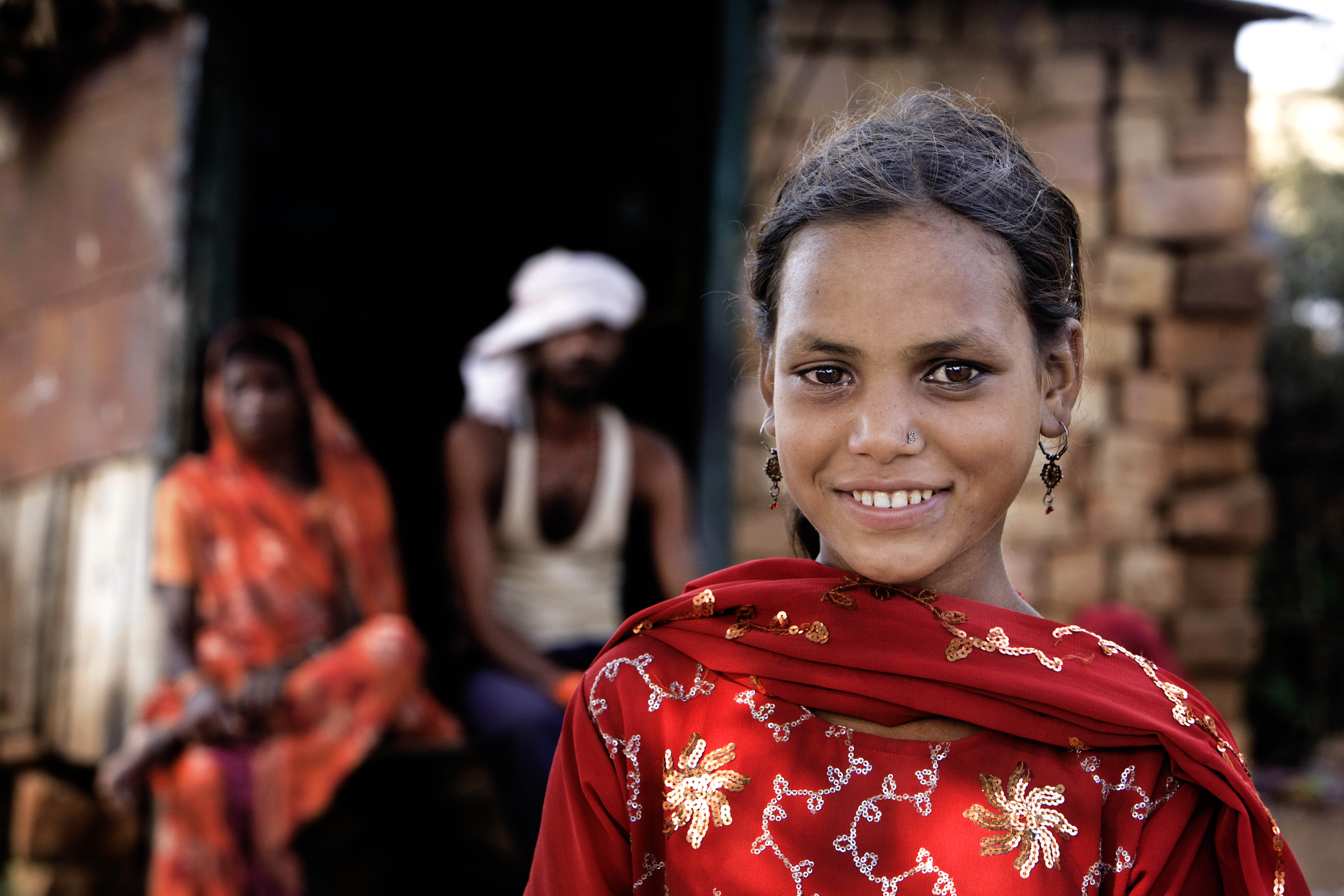
الفتيات والنساء

بواسطة Delphine Dorsi , 26 تشرين الثاني/نوفمبر 2013

بالرغم من التطور، ما يزال هنالك تمييز عنصري ضد النساء في الحصول على التعليم وفي النظام التعليمي، إلا أن هنالك 57 مليون طفل لا يدرسون في المدارس، منهم 31 مليون فتاه، وثلثي الكبار غير المتعلمين هم من النساء. العدد الأكبر ممن يتركون الدراسة هو من الفتيات أكثر من الفتيان وخاصة في المناطق الريفية. 

هنالك العديد من الأسباب التي تمنع الفتيات من الذهاب إلى المدارس، مثل الفقر والحمل والعنف المدرسي والزواج المبكر والعادات التي تميز على أساس النوع الاجتماعي، وهي من المعيقات الرئيسية التي تعيق تعليم الفتيات في جميع أنحاء العالم. تسبب الرسوم المدرسية والتهديد بالعنف سواء في المدرسة أو في الطريق إليها، وعائدات عمل الفتيات في المنازل، كل هذه تسبب حرمان الفتيات من التعليم، ويقطع الحمل والزواج المبكر مسيرة الفتيات التعليمية قبل أن يكملن التعليم الثانوي.  

Sections
Title
كفلت حقوق الفتيات والنساء بموجب القانون الدولي
Text

تعد المادة 10 من اتفاقية القضاء على جميع أشكال التمييز العنصري ضد المرأة هي المادة الأكثر شمولا عن حق الفتيات والنساء في التعليم، حيث تنص على التزام الدول باتخاذ التدابير اللازمة للقضاء على التمييز العنصري ضد النساء من أجل ضمان حقوق متساوية مع الرجال في مجال التعليم وذلك من أجل ضمان:

  • ظروف متكافئة في الحصول على الدراسة في جميع مراحل التعليم في كل من المناطق الحضرية والريفية
  • تكافئ في جودة التعليم، والقضاء على أي مفهوم نمطي عن ادوار الرجال والنساء
  • فرص متكافئة في الحصول على منح دراسية أو أي منح أخرى للتعليم، وفي الوصول إلى برامج إكمال التعليم والتي تتضمن برامج محو الأمية والمشاركة في الرياضة والتعليم البدني
  • تقليص عدد الفتيات اللواتي يتركن الدراسة
  •  الحصول على المعلومات الدراسية عن الصحة، والذي يتضمن الاستشارة عن تنظيم الأسرة.

ضمن العهد الدولي الخاص بالحقوق الاقتصادية والاجتماعية والثقافية، واتفاقية حقوق الطفل، واتفاقية اليونسكو لمكافحة التمييز في مجال التعليم، والعهد الدولي الخاص بالحقوق المدنية والسياسية أيضا حق الفتيات والنساء في التعليم حيث جمعت بين الأحكام العامة المتعلقة بعدم التمييز مع أحكام محددة عن الحق في التعليم.

Title
كُفلت حقوق الفتيات والنساء في التعليم على المستوى الوطني
Text

كُفلت حقوق الفتيات والنساء في التعليم في إفريقيا بشكل خاص

  • تتضمن المادة 12 من البروتوكول الملحق بالميثاق الأفريقي لحقوق الإنسان والشعوب بشأن حقوق المرأة في أفريقيا، قائمة التزامات الدولة لضمان حق الفتيات والنساء في التعليم والتدريب، بما في ذلك حماية المرأة، وخاصة الفتيات الصغار، من التحرش الجنسي في المدارس والمؤسسات التعليمية الأخرى وتوفير العقوبات ضد مرتكبي هذه الممارسات. وتلتزم الدول أيضا في اتخاذ إجراءات إيجابية لتشجيع محو الأمية بين النساء، والتعليم والتدريب وتشجيع التحاق الفتيات في المدارس وبقاءهن فيها.
  •  تلزم المادة 11 من الميثاق الإفريقي بشأن حقوق الطفل ورفاهيته الدول لاتخاذ تدابير خاصة بالنسبة للإناث من أجل ضمان حصول متكافئ على التعليم.
  • تنص المادة 13 من ميثاق الشباب الإفريقي على أن تلتزم الدول، حيثما أمكن، بضمان حصول الفتيات والشابات اللواتي يحملن أو يتزوجن قبل أن يكملن تعليمهن على فرصة لاستكمال التعليم.
Title
تضمن بعض الدول حق الفتيات والنساء في التعليم على المستوى الوطني
Text

انظر مثلا إصدار اليونسكو عن إنفاذ الحق في التعليم  Implementing the Right to Education, A Compendium of practical examples (الصفحات 85 إلى 95)، ولكن يجب فعل أكثر من ذلك على مستوى العالم من أجل تحويل الالتزامات الدولية للدولة إلى قوانين وسياسات وطنية وضمان إنفاذها

Title
The right to education of women and girls at the regional level
Text

Women and girls face different barriers in relation to their education in different regions of the world. The right to education, although universal, takes on specific meanings when interpreted and applied in light of shared regional customs, traditions, cultures, values, etc. Regional human rights treaties, therefore, guarantee the right to education in an adapted form–one that acknowledges the barriers common to the region, as well as reflecting the universal and region-specific aims of education.

Africa is the only region that has a human rights treaty dedicated specifically to women and girls. Article 12 of the Protocol to the African Charter on Human and Peoples’ Rights on the Rights of Women in Africa (2003) tasks States parties with eliminating all forms of discrimination against women in education, including obligations to:

  • eliminate gender stereotypes in textbooks, syllabuses, and the media

  • protect women and girls from all forms of abuse, including sexual harassment in schools and other educational institutions, and provide for sanctions against the perpetrators of such practices

  • provide access to counselling and rehabilitation services to women who suffer abuses and sexual harassment

  • integrate gender sensitisation and human rights education at all levels

Under the Protocol states must actively promote:

  • literacy amongst women

  • education and training at all levels, in all disciplines, particularly in the sciences and technology

  • enrolment and retention of girls in formal and non-formal education settings, including fundamental education programmes

The Protocol also commits States parties to taking action on a number of issues affecting women's and girls' right to education, including to:

  • eliminate discrimination against women (Article 2)

  • ban female genital mutilation (Article 5 (b))

  • set the minimum age of marriage for girls at 18 (Article 6 (b))

  • ensure the effective participation and representation of women in decision-making (Article 9 (2))

  • guarantee reproductive and health rights (Article 14)

The right to education of girls is also comprehensively protected by a number of other African treaties.

Article 13 of the African Youth Charter (2006, AYC) sets out the right to education as applied to African youth (defined by the AYC as every person between the ages of 15-35 years), including provisions:

  • requiring that curricula include information on cultural practices that are harmful to the health of young women and girls (Article 13 (3) (f))

  • that girls and young women who become pregnant or get married have the opportunity to continue their education (Article 13 (4) (h))

  • on the introduction of scholarship and bursary programmes to encourage entry into post-primary school education and into higher education for outstanding youth from disadvantaged communities, especially young girls (Article 13 (4) (l))

  • to establish and encourage participation of all young men and young women in sport, cultural and recreational activities as part of holistic development (Article 13 (4) (m))

  • to promote culturally appropriate, age specific sexuality and responsible parenthood education (Article 13 (4) (n))

Article 11 of the African Charter on the Rights and Welfare of the Child (1990) requires States parties to take special measures to ensure equal access to education for girls (Article 11 (3) (e)) and to take ‘all appropriate measures to ensure that children who become pregnant before completing their education shall have an opportunity to continue their education on the basis of their individual ability’ (Article 11 (6)).

For further information, see the African Union Commission’s and OHCHR’s Women’s Rights in Africa (2016).

In the Arab region, the Arab Charter on Human Rights (2004) guarantees equality between men and women and non-discrimination in Article 3 and the right to ‘compulsory and accessible’ primary education without discrimination of any kind in Article 41.

In Asia, the non-legally binding ASEAN Human Rights Declaration (2012) guarantees the right to education in Article 31 and non-discrimination as a general principle, but not as a human right.

In Europe, the European Convention on Human Rights (1950) guarantees the right to non-discrimination in Article 14 which read with Article 2 of the Protocol to the European Convention on Human Rights (1958) on the right to education, prohibits discrimination in education on the basis of sex. In addition, Protocol 12 to the European Convention on Human Rights (2000) prohibits discrimination in the enjoyment of any legal right as set out in national laws.

The European Social Charter (revised) (1996) prohibits discrimination under Article E, provides that the state takes all necessary measures to provide for free primary and secondary education and encourage regular attendance under Article 17, and the right to vocational guidance (Article 9) and training (Article 10).

The Convention on Preventing and Combating Violence against Women and Domestic Violence (2011, Istanbul Convention) identifies education as a key area in which to take measures to eliminate gender-based violence and its causes, and requires states to take:

the necessary steps to include teaching material on issues such as equality between women and men, non‐stereotyped gender roles, mutual respect, non‐violent conflict resolution in interpersonal relationships, gender‐based violence against women and the right to personal integrity, adapted to the evolving capacity of learners, in formal curricula and at all levels of education.

The Charter of Fundamental Rights of the European Union (2010), which applies to EU institutions and bodies and EU member states when they are acting within the scope of EU law, guarantees the right to education (Article 14), non-discrimination (Article 21), and equality between women and men (Article 23).

In addition, the Council of Europe has a non-legally binding Recommendation of the Committee of Ministers to member states on gender mainstreaming in education (2007).  

In the inter-America region the Additional Protocol to the American Convention on Human Rights in the Area of Economic, Social and Cultural Rights 'Protocol of San Salvador' (1988) prohibits discrimination under Article 3 and the right to education under Articles 13 and 16.

Articles 34, 49, and 50 of the Charter of the Organization of American States (1948) guarantee various aspects of the right to education.

The Inter-American Convention on the Prevention, Punishment and Eradication of Violence Against Women (1994, Convention of Belém do Pará) states that all women have the right to be free from violence which includes the right to freedom from all forms of discrimination and the right to be ‘educated free of stereotyped patterns of behavior and social and cultural practices based on concepts of inferiority or subordination’ (Article 6).

Lastly, the Inter-American Democratic Charter (2001) calls for the elimination of gender discrimination (Article 9) and states that ‘a quality education be available to all, including girls and women’. (Article 16).

Title
The right to education of women and girls at the national level
Text

When a state ratifies a human rights treaty which guarantees the right to education, without discrimination of any kind (see the three sections above), they are under a legal obligation to implement these provisions in their jurisdiction. This means that states cannot just ratify a treaty guaranteeing human rights without taking the necessary steps to make it a reality for its’ citizens. Such steps include administrative, legal, policy, and economic measures. The Committee on the Elimination of Discrimination against Women’s General Recommendation 36 on girls’ and women’s right to education elaborates such measures and lays out precise and actionable legal and policy recommendations that would bring states into compliance with obligations flowing from Article 10 and other relevant provisions of the Convention on the Elimination of All Forms of Discrimination against Women (CEDAW).

States’ legal commitment to CEDAW, the Unesco Convention against Discrimination in Education (CADE), the International Covenant on Economic, Social and Cultural Rights (ICESCR), the Convention on the Rights of the Child (CRC)—the four foremost treaties guaranteeing the right to education of women and girls—is relatively widespread. As of December 2017, 189 states have ratified and acceded to CEDAW which is 96% of UN Member States, CADE has 101 States parties, ICESCR has 166 States parties, and the CRC has 196 States parties. According to our research (forthcoming), which classifies states by level of legal commitment to gender equality in education based on the treaties they have ratified, nearly half of all states (87; 44%) have the highest possible legal commitment and the majority of states cluster around the two highest levels (out of six levels) (144; 73%). However, despite this, universal domestic implementation of the right to education for all women and girls is far from being achieved, which represents a major structural barrier to the realisation of gender equality in education. Below is a map showing which states constitutionally protect the right to education of women and girls.

143.png

For more information on the legal status of the right to education of girls and women in specific countries, see:

  • RTE’s background paper for the Global Education Monitoring Report’s 2017 Gender Review which includes information on how legally committed each state is to achieving the right to education of women and girls free from discrimination

  • UNESCO’s global database on the right to education (searching by the themes ‘non-discrimination’ and ‘gender equality’)

In addition, UNGEI has produced useful guidance aimed at country and regional-level education planners to assist in developing gender-responsive Education Sector Plans.

Title
Education as a ‘multiplier right’
Text

Women and girls are rights-holders and as such are entitled to the full exercise and equal enjoyment of the right to education. However, in addition to being a fundamental right in and of itself, the right to education is a ‘multiplier right’ and is, therefore, instrumental in enabling them to benefit from and claim other key rights, such as those related to work, property, political participation, access to justice, freedom from violence and health, including sexual and reproductive health and rights.

Girls who receive more education are less likely to marry as children and to become pregnant and young mothers. According to Plan, a girl in a low income country receiving seven years of education marries four years later on average, and has fewer and healthier children. According to UNESCO, children of literate mothers are over 50% more likely to live past the age of five. There are also significant health benefits for girls and women, with considerable evidence that an increase in a mother’s education reduces the likelihood of dying in childbirth.

Ensuring quality education for all girls also increases how much they can earn and counters the continued feminisation of poverty. According to the World Bank Group (WBG), one year of secondary education for a girl can mean as much as a 25% increase in wages later in life. The benefits of this are passed on to their children as women tend to reinvest 90% of their income in their families.

Studies have consistently shown that educating girls leads to significant and wide-reaching benefits not only to women themselves and their families but also to their societies and economies. Girls’ education is proven to have a powerful impact on economic growth. According to WBG a one percentage point increase in the proportion of women with secondary education raises the average gross domestic product (GDP) by 0.3 percent. Education can improve the opportunities for women to work, which in turn can impact on poverty reduction. For example, in Latin America, when women’s participation in the labour market increased 15 percent in just one decade, the rate of poverty decreased by 30 percent (WBG). 

Title
Barriers to girls’ education
Text

Girls and women face specific forms of discrimination in accessing education, within education systems, and through education. The accordions below explain the most common barriers woman and girls encounter around the world. Each of these obstacles is underpinned by harmful gender stereotypes about the role of women and men in society.

Although sex is an expressly prohibited grounds of discrimination under international human rights law, it is important to recognise that women and girls are highly heterogeneous. Gender inequality and discrimination to, in, and through education is experienced in varying forms and at all levels by women and girls, depending on their personal, local, and national context. But every woman and girl who has attended school has likely encountered some form of discrimination in education at some point in her life.

Intersectional discrimination recognises that women and girls face discrimination in different ways. The interaction between gender and other factors, such as poverty, living in rural areas, and/or characteristics, such as physical or mental impairment, race, ethnicity, sexual orientation, and gender identity often exacerbates the discrimination women and girls face regarding their right to education.

For example, according to the 2016 Global Education Monitoring Report’s 2016 Gender Review (p. 19), in 2011 in India, upper secondary completion rates of rich urban girls and boys averaged 70%. For poor rural males the average was 26% but the rate was much lower for poor rural females, suggesting it is not their gender or wealth status or where they live that affects their enjoyment of their right to education but the intersection of being female, identifying as a women or girl, coming from a low income family, and living in a rural area.

Girls and women can face discrimination in all areas and throughout all stages of their life. Eliminating discrimination in education is an important start, but women and girls will often continue to face discrimination upon leaving school. Discrimination, in all its forms, whether it happens in public or private, needs to be tackled in a comprehensive and holistic manner (cross-sectorally and through various measures that take into account how discrimination and inequality aggregate throughout a woman’s life) and at all levels in order to ensure that women and girls enjoy and benefit from their education. Common challenges include:

  • the gender pay gap–women, on average, earn less than men (59% according to the World Economic Forum)

  • unequal political participation and representation (according to the Inter-Parliamentary Union only 23% of parliamentarians and 5.7% of world leaders are women)

  • under-representation in certain fields, such as in science, technology, engineering, maths (STEM), as well as sports, in particular in leadership positions

  • lack of flexible working arrangements, parental leave, and maternity benefits

  • lack of access to healthcare and enjoyment of sexual and reproductive health and rights

  • exposure to gender-based violence against women, including harmful practices

  • paid and unpaid care work which continues to be disproportionately borne by women and girls (ActionAid report that a woman will do an average of four years extra work compared to her male peers over her lifetime)

Title
Gender stereotypes and gender stereotyping
Text

Gender stereotypes and gender stereotyping underpin or exacerbate many of the obstacles faced by women and girls in enjoying their right to education. Ideally, education systems should be focal points for action to combat gender stereotypes and gender stereotyping. However, in some cases, the education system, and particularly the curriculum, textbooks, and teachers, play a role in perpetuating harmful gender stereotypes, which has wide ranging effects on girls throughout their lives, from the course options and subjects they take, which influences their employment prospects, to their ability to make informed decisions about their sexual and reproductive health.

According to Cook and Cusack (2010, p. 9) a gender stereotype is a generalised view or preconception about attributes or characteristics that are or ought to be possessed by, or the roles that are or should be performed by women and men. According to a OHCHR report (2013, p. 18), a gender stereotype is harmful when it limits women’s and men’s capacity to develop their personal abilities, pursue their professional careers and make choices about their lives and life plans.

Gender stereotyping is the practice of ascribing to an individual woman or man specific attributes, characteristics, or roles by reason only of her or his membership in the social group of women or men. Gender stereotyping is considered wrongful when it results in a violation or violations of human rights and fundamental freedoms.

Harmful gender stereotypes and wrongful gender stereotyping can affect girls before they step into a classroom and may even prevent girls from going to school. For example, stereotypical views that girls are domestic, homemakers, and caregivers may lead families to question the point of sending their daughters to school if they are to become wives and mothers, whilst the stereotype that men should be breadwinners means that boys are prioritised when it comes to education. Even when girls do go to school, some are still expected to juggle domestic responsibilities, such as cleaning, cooking and fetching water, on top of their school work.

Harmful gender stereotypes and wrongful gender stereotyping also affect girls in the school environment. For example, stereotypes about the different physical and cognitive abilities of girls and boys, leads to certain school subjects and teaching methods being gendered. Boys are considered better suited to maths, technology, the sciences, and sports whereas girls are considered better suited to the arts and humanities. This has the effect of excluding girls and boys from certain subjects (sometimes, particularly in gender-segregated schools, certain subjects are not even offered to female students) but also has a detrimental effect on girls’ further educational and employment opportunities, as girls and boys go on to study different subjects at university, where ‘male’ subjects tend to lead to more lucrative and influential careers. Gender inequality is then perpetuated through hiring practices that further disadvantage women.


International human rights law imposes specific obligations on states to eliminate harmful gender stereotypes and wrongful gender stereotyping. See our legal factsheet on gender stereotypes and the right to education for further information.

Title
Gender-based violence against women and girls
Text

The Committee on the Elimination of Discrimination against Women (the Committee) defines gender-based violence against women (GBV) as ‘violence that is directed against a woman because she is a woman or that affects women disproportionately’ (General Recommendation 19, para. 6). Such violence takes multiple forms, including: ‘acts or omissions intended or likely to cause or result in death or physical, sexual, psychological or economic harm or suffering to women, threats of such acts, harassment, coercion and arbitrary deprivation of liberty’ (General Recommendation 35, para. 14).

The Committee considers GBV to be a form of discrimination, under Article 1 of the Convention on the Elimination of All Forms of Discrimination against Women (1979, CEDAW). The Committee’s legal interpretation of GBV as a human rights violation can be found primarily in General Recommendations 19 and 35.

Gender-based violence against girls, for instance, rape, domestic violence, sexual harassment and assault, corporal punishment, and harmful practices such as child marriage (see above) and female genital mutilation can keep girls out of school temporarily or indefinitely. Evidence collected by the World Bank Group (2015, p. 1) shows that in Nicaragua, ‘63% of the children of abused women had to repeat a school year and dropped out of school on average four years earlier than others.’ And in Zambia, ‘girls who experienced sexual violence were found to have more difficulty concentrating on their studies, some students transferred to another school to escape harassment, and others dropped out of school because of pregnancy.’

GBV often occurs in schools, known as ‘school-related gender-based violence’ (SRGBV), which Unesco defines as: ‘acts or threats of sexual, physical or psychological violence occurring in and around schools, perpetrated as a result of gender norms and stereotypes, and enforced by unequal power dynamics’ (2016, p. 13). SRGBV can often lead to girls under-performing and/or dropping out of school altogether.

SRGBV commonly affects girls on the journey to and from school, where there is little to no supervision, for example, in Japan female students have reported being sexually assaulted on public transportation. The World Bank Group report that parental fears for the safety of girls in traveling to school impact female enrolment rates in Africa, South Asia, and the Middle East.  

SRGBV also occurs on school premises making the school environment unsafe and not conducive for learning. It can be perpetrated by both teachers and other students. A 2010 survey in the Côte d’Ivoire found that 47% of teachers reported initiating sexual relations with students. In Kenya, after a confidential helpline was set-up, over 1000 teachers were dismissed for abusing girls, mostly in poor, rural areas. Examples of SRGBV also includes bullying by fellow students. SRGBV is not confined to primary and secondary education. At universities and colleges around the world, female students are victims of physical and sexual violence including rape, bullying, and harassment. End Violence Against Women report that 1 in 7 female students in the UK experience serious physical or sexual assault during their time as a student.

SRGBV is increasingly taking place online, through digital technologies, for instance, instant messaging and social media. Gender-related forms of cyberbullying and harassment include being sent inappropriate photos and being coerced into sending sexual images.

SRGBV also includes attacks on girls for accessing education, motivated by ‘fears surrounding the potential role of education as a catalyst for social, cultural, economic and political transformation’ (OHCHR, 2015, p. 4). Prominent examples include the abduction of nearly 300 schoolgirls in April 2014 by Boko Haram in northeast Nigeria and the 2012 shooting of education activist Malala Yousafzai by members of the Taliban in Pakistan (p. 3).

International human rights law prohibits GBV in all settings, including in education. This includes acts or omissions by state actors and bodies, such as public authorities and officials, as well as by non-state actors, for example, partners, family members, teachers, etc. States have specific responsibilities under human rights law dependent on the perpetrator which are well explained in paragraphs 21-6 of CEDAW General Recommendation 35.  

For specific provisions of international and regional law relating to gender-based violence against women, see our legal factsheet (forthcoming).  


For further reading, see Unesco and UN Women (2016) Global guidance on school-related gender-based violence. See also Global Education Monitoring Report’s blog Teachers are central to any effective response to school-related gender-based violence (part 1 and part 2).

Title
Child marriage and early and unintended pregnancy
Text

Child marriage is any formal marriage or informal union where one or both of the parties are under 18 years of age. According to Girls Not Brides, every year 15 million underage girls get married. Globally, it is estimated that there are 720 million women alive today who were married before the age of 18—that’s 10% of the world’s population. Child marriage happens everywhere but is most prevalent in south Asia (45% of girls married by 18; 17% married by 15), sub-Saharan Africa (39%; 12%), and Latin America and the Caribbean (23%; 5%).

Terminology

‘Child marriage’, ‘early marriage’, ‘arranged marriage’, and ‘forced marriage’ are often used interchangeably. However, each describes a particular phenomenon, which in practice, often overlap. Forced marriage is where one or both people do not consent to the marriage or consent to stay in the marriage, and pressure or abuse is used to coerce one or both parties. This is different to an arranged marriage, where both people are at least 18 years old and have consented to the union. Child marriages are a form of forced marriage because a child cannot provide full, free, and informed consent. Early marriage is often used synonymously with child marriage. At RTE we prefer the term ‘child marriage’ because ‘early’ is a relative term, whereas ‘child’ under international law refers to anyone who has not reached the age of majority, i.e., the age at which someone is considered an adult.  For further information, see paras 20-24 of CEDAW and CRC Joint General Recommendation 31 on harmful practices.

 
Child marriage is a discriminatory practice rooted in the notion that girls and women are inferior to men and should conform to gender stereotypes that value women as mothers, carers, the property of men, sexual objects, vulnerable and in need of protection, and not as rights-holders. Myriad factors also contribute to the perpetuation of child marriage, including: gender inequality, poverty, gaps in and non-implementation of laws, lack of education, peer pressure, and conflict and emergencies. See CARE’s page on the causes of child marriage for further information.

Child marriage violates multiple human rights, including the right to education, making it a particularly egregious practice. Children who get married are more likely to drop out of school and children who are not in school are more likely to get married. Statistics from the World Bank and International Center for Research on Women reveal that 10-30% of parents, depending on country, reported that their child dropped out of secondary school due to child marriage and/or pregnancy. Their research also indicates that for every year a girl marries before the age of 18, the likelihood she completes secondary education decreases by 0.22 years on average. In Latin America and Asia, girls who marry before the age of 12 have a reduced likelihood of 21% of completing their secondary education.

Although permissible under international law, marriages that occur after the age of 18 may also affect a girl’s education, particularly her ability to access higher education or other forms of tertiary education.

Linked to child marriage is early and unintended pregnancy. Girls Not Brides report that 90% of adolescent births in low and lower-middle income countries are to married girls. Pregnancy and motherhood often has profound impacts on girls’ education. Pregnant girls are often banned from attending school and sitting exams, and mothers often lack access to bridging programmes which allow girls to catch-up on their missed education in order to reenter mainstream education. Further, lack of free early childhood care and widely held beliefs that child rearing is the primary responsibility of the mother, means that women and girls often do not reenter education.

Pregnancy and motherhood can also occur independently from child marriage, as a result of rape, which is particularly common during conflict and other emergencies (see the case of Sierra Leone which saw an increase in teenage pregnancy during the ebola crisis due to the closure of schools). Teenage pregnancy and motherhood is also a product of a lack of information about sexual and reproductive health and a lack of access to contraception (birth control).

So what does international law say about child marriage and what obligations do states have to ensure the right to education of married and/or pregnant girls?

The Committee on the Rights of the Child and the Committee on the Elimination of All Forms of Discrimination against Women have stated, in a Joint Recommendation, that the minimum age for marriage should be 18 for both men and women. However, the committees take the view that a balance must be struck between recognising that child marriage is a harmful, discriminatory practice and respecting that in exceptional cases some children may be mature and capable enough to make informed decisions for his/herself regarding getting married, provided the child in question is at least 16 years old and such decisions are assessed by a judge ‘based on legitimate exceptional grounds defined by law and on the evidence of maturity, without deference to culture and tradition’ (para. 20).

This limited exception, however, does not in any way dilute states’ obligations to eliminate child marriage and early or unintended pregnancy, and to protect the human rights of child brides and mothers, including the right to education.

In order to prevent child marriage states must establish and enforce a minimum age of marriage of 18. Often, minimum legal ages for marriage are set, but the law is inconsistent (see Tanzania, for example), customary law, such as Shari’a or tribal law applies, or the law allows girls to be married in certain situations, for example, if she is pregnant or has parental permission. Under international law, exceptions such as these are prohibited.

In Africa, regional human rights law is strong and mandates that states enact legislation that sets the minimum age of marriage at 18 without exception (Article 6 (b), Protocol to the African Charter on Human and Peoples’ Rights on the Rights of Women in Africa [2003]).

The map below illustrates that very few states have set the minimum age of marriage at 18. This is particularly true of the Americas, sub-Saharan Africa, and South East Asia—all regions with high child marriage prevalence rates. It should also be pointed out that child marriage is permissible by law in a number of ‘global north’ countries, notably the US.166.png

Under international law, states are not allowed to refuse access to school by expelling girls on the basis of marriage, pregnancy, or having given birth as this would constitute discrimination. This includes a prohibition of mandatory pregnancy testing, which has been documented in various African states, including: Tanzania, Ghana, Kenya, Nigeria, Sierra Leone, Uganda, and Zimbabwe.

Further, in order to rectify the negative impacts of child marriage and early pregnancy on the right to education, for example, if a girl misses any of her primary education, states must provide fundamental education, that is education that replaces missed primary education for girls who become married or pregnant at primary school age (Article 13 (d), International Covenant on Economic, Social and Cultural Rights). However, most child marriages and early pregnancies occur during secondary education. The Convention on the Elimination of All Forms of Discrimination against Women (1979, CEDAW) adapts the fundamental education provision to include obligations to make efforts to keep girls in school and to organise ‘programmes for girls and women who have left school prematurely’ (Article 10 (f)). Programmes that allow girls to re-enter education are known as ‘re-entry programmes’. Successful examples of reentry programmes include Zambia and Uganda.

Given the prevalence of child marriage and pregnancy in African countries, African human rights law also makes provision for fundamental education and reentry programmes but protections are inconsistent.

The African Youth Charter (2006) requires states to: ‘Ensure, where applicable, that girls and young women who become pregnant or married before completing their education shall have the opportunity to continue their education’ (Article 13 (4) (h)).

Article 12 (2) (c) of the Protocol to the African Charter on Human and Peoples’ Rights on the Rights of Women in Africa is less specific and urges states to ‘promote the enrolment and retention of girls in schools and other training institutions and the organisation of programmes for women who leave school prematurely’.

Article 11 (6), African Charter on the Rights and Welfare of the Child, requires states to take ‘all appropriate measures to ensure that children who become pregnant before completing their education shall have an opportunity to continue with their education on the basis of their individual ability.’ Although this provision would seem to provide for re-entry programmes, the caveat that such opportunity is based on ‘individual ability’ falls short of international standards.

International law also seeks to empower girls to make decisions for themselves regarding unintended pregnancy and requires that sex, reproductive health, and responsible parenthood education is given to both boys and girls. See, for example, Article 10 (h), Convention on the Elimination of All Forms of Discrimination against Women and Article 13 (4) (n), African Youth Charter.

Below is a video explaining the importance of comprehensive sexuality education.

<iframe width="560" height="315" src="https://www.youtube.com/embed/eV92ALv-TGw" frameborder="0" allowfullscreen></iframe>

Lastly, international law requires states to dismantle the social, economic, cultural, and political conditions that facilitate the pervasive nature of this practice. A holistic approach is required to eliminate child marriage and pregnancy because its causes are varied and deeply entrenched. However, evidence suggests that any approach must include efforts to ensure girls enjoy and can exercise their right to education. Girls Not Brides states that girls with a secondary education are six times less likely to marry than a girl with little or no education.


For more information on preventing child marriage and early and unintended pregnancy through education, see Unesco’s Early and unintended pregnancy: Recommendations for the education sector (2017).

Title
Lack of inclusive and quality learning environment and inadequate and unsafe education infrastructure, including sanitation
Text

A bad school environment can deter girls from attending school and also negatively impact on the quality of education girls receive. The school environment refers not just to the physical infrastructure of the school premises but also the wider learning environment.

According to international human rights law, the school environment must not impair the right to education and it must also contribute to the aims of education and the right to a quality education by creating an inclusive and quality learning environment (see paras 10, 19, and 22 of the Committee on the Rights of the Child’s General Comment 1).

Common barriers regarding the learning environment, include:

Perhaps one of the most significant barriers to an inclusive and quality learning environment is the lack of female teachers particularly in low and middle income countries, which is itself a manifestation of the historical lack of access to education and harmful gender stereotypes about the role of women. A Unesco brief highlights (2008, p. 1-2) that increasing the number of women teachers has a positive impact on girls’ education, because:

  • in some conservative communities, parents will not allow their daughters to be taught by a male teacher

  • the presence of women in schools can impact positively on girls’ retention in school and on their achievement

  • at the school policy level, women teachers may act as advocates for girls, representing their perspectives and needs, and promoting more girl-friendly learning

  • women teachers provide new and different role models for girls, breaking down harmful gender stereotypes

In respects to the physical school environment, inadequate and unsafe infrastructure, particularly the lack of toilets, gender-segregated toilets, changing facilities, and access to safe drinking water may discourage girls from attending school. Lack of toilets and in particular gender-segregated toilets affects both girls and boys, however given the specific needs of girls, the impact disproportionately falls on girls.

Girls require toilets for menstrual hygiene purposes, this includes access to sanitary products, without which girls often miss school because of the social stigma of menstruation, they are unable to concentrate during classes, amongst other reasons. For example, the Guardian reports that girls from low income families in the UK often miss schools because they cannot afford sanitary products and do not ask for them because of the social stigma attached to menstruation.

Within the school premises, toilets, especially non-gender segregated toilets, tend to be where girls are most vulnerable to school-related gender-based violence because they are often unsupervised.

Title
Poverty
Text

Poverty is the biggest factor determining whether a girl accesses education. According to the Global Education Monitoring report, in all regions except sub-Saharan Africa, children from rich families, whether boy or girl, will most likely attend all levels of basic education. However, girls from poor families in sub-Saharan Africa, Northern Africa and Western Asia, and Southern Asia, will are less likely than their male peers to attend school and this lack of participation increases at higher education levels (2016, p. 10).

A number of factors contribute to girls from poor families not being able to attend school, the biggest of which is the lack of free education, particularly in the formative years. This may be because governments do not have legal and policy frameworks in place to make free education a reality or they do but it is not effectively implemented, or it may not be adequately resourced, or there may be corruption which draws resources away from their intended use.

Lack of free education results in an added financial burden on families, which may come in the form of school fees (or other direct fees) or indirect fees such as for school uniforms, exam fees, security, school transportation, etc. Such fees are a direct barrier to school attendance for many girls, either because families cannot afford these costs or the costs may force families to select which of their children to send to school. In such instances, it is usually boys who are favoured because of the low social and economic value placed on the education of girls. To mitigate this, international human rights law requires states to guarantee free and compulsory primary education, progressively free education at all other levels, and targeted measures for groups at risk of dropping out (for instance, school transportation for students living in rural areas). Human rights law, however, neglects the importance of free or accessible early childhood care and education (ECCE)/pre-primary education. ECCE has positive impacts on child development and targeted ECCE interventions ‘can compensate for vulnerability and disadvantage, regardless of underlying factors such as poverty, gender,...’ (EFA Global Education Monitoring Report 2007: Strong foundations, p. 113). For further information on states’ human rights obligations, see our page on free education.


Lack of free education is closely linked with government priorities reflected in fiscal policy. Ostensibly because of the 2008 financial crisis, there has been a trend in governments reducing spending on public services, including education, by decreasing the amount they collect through taxation. Such austerity measures have had a disproportionate impact on women and girls, particularly as it is the most marginalised in society who tend to benefit from public services.

One of the consequences of austerity and the failure of states to effectively formulate, implement, resource, and enforce free education legal and policy frameworks as per their human rights obligations is the growth of private education providers, mainly in low and middle income countries, but the phenomenon has increasingly been observed in high income countries (see for example, the UK, US, and Sweden).

The privatisation of education poses several human rights concerns that may negatively impact girls’ education, for instance: it may encourage further divestment in public education, gradually eroding the public education system and its capacity to reach the most marginalised, particularly girls with disabilities and private providers can indirectly discriminate against girls by levying fees which have a disproportionately negative impact on girls’ participation in education, due to parental favouring of boys’ education.

International human rights law imposes obligations on states to ensure that private providers do not impair the right to education. See our page on the privatisation of education for further information.


Finally, global action to tackle poverty through sustainable development has also focused on gender inequality and education. The international community has, through the 2030 Agenda for Sustainable Development, recognised the importance of inclusive and quality education (sustainable development goal 4) and gender equality and women’s empowerment (sustainable development goal 5) in achieving sustainable development and has adopted various goals, targets, and indicators that are largely aligned with human rights law. See our page on Education 2030 for more information. See also our contribution to the Global Education Monitoring report 2017-8 Gender Review (forthcoming).

Title
صكوك دولية
Text

لمزيد من التفاصيل، انظر صكوك دولية - حق الفتيات والنساء في التعليم

Title
Pauvreté
Text

La pauvreté est le plus grand facteur déterminant l’accès à l’éducation d’une fille. Selon le Rapport mondial de suivi sur l’éducation, dans toutes les régions, à l'exception de l'Afrique subsaharienne, les enfants issus de familles riches, garçons ou filles, fréquenteront probablement tous les niveaux de l'éducation de base. Cependant, les filles issues de familles pauvres d'Afrique subsaharienne, d'Afrique du Nord et d'Asie occidentale et d'Asie du Sud seront moins susceptibles que leurs homologues masculins de fréquenter l'école et ce manque de participation augmente au niveau de l'enseignement supérieur (2016, p.10)

Un certain nombre de facteurs contribuent à ce que les filles issues de familles pauvres ne puissent pas aller à l'école, le plus important étant le manque d’enseignement gratuit, en particulier pendant les années formatrices. Cela peut être dû au fait que les gouvernements ne disposent pas de cadres juridiques et politiques pour faire de l'éducation gratuite une réalité ou ils en ont mais ceux-ci ne sont pas mis en oeuvre efficacement, ou ne pas financés de manière adéquate, ou encore il peut y avoir une corruption détournant les ressources de l’usage auquel elles étaient destinées.

Le manque d'éducation gratuite entraîne une charge financière supplémentaire pour les familles, qui peut prendre la forme de frais de scolarité (ou d'autres frais directs) ou de frais indirects tels que les uniformes scolaires, les frais d'examen, la sécurité, le transport scolaire, etc. De tels frais sont un obstacle direct à la fréquentation scolaire de nombreuses filles, soit parce que les familles ne peuvent pas assumer ces coûts, soit parce que les coûts peuvent forcer les familles à choisir lequel de leurs enfants envoyer à l'école. Dans de tels cas, ce sont généralement les garçons qui sont favorisés en raison de la faible valeur sociale et économique accordée à l'éducation des filles. Pour atténuer cela, le droit international en matière de droits humains exige que les États garantissent un enseignement primaire gratuit et obligatoire, une éducation progressivement gratuite à tous les autres niveaux et des mesures ciblées pour les groupes présentant un risque de décrochage scolaire (par exemple, le transport scolaire pour les enfants vivant dans des zones rurales). Cependant, le droit en matière de droits humains néglige l'importance des soins et de l’éducation de la petite enfance (SEPE) / éducation préscolaire, gratuits et accessibles. Les SEPE ont des impacts positifs sur le développement de l'enfant et les interventions ciblées de SEPE «peuvent compenser la vulnérabilité et le désavantage, quels que soient les facteurs sous-jacents tels que la pauvreté, le genre, ...» (EFA Rapport mondial de suivi sur l’éducation pour tous 2007: Un bon départ, p. 113).

Pour plus d’informations sur les obligations des États en matière de droits humains, veuillez consulter notre page sur la gratuité de l’éducation.

Le manque d'éducation gratuite est étroitement lié aux priorités gouvernementales reflétées dans la politique budgétaire. Apparemment, en raison de la crise financière de 2008, les gouvernements ont tendance à réduire leurs dépenses relatives aux services publics, y compris l'éducation, en diminuant le montant qu'ils perçoivent grâce aux impôts. De telles mesures d'austérité ont eu un impact disproportionné sur les femmes et les filles, d'autant plus que ce sont les personnes les plus en marge de la société qui ont tendance à bénéficier des services publics.

L'une des conséquences de l'austérité et de l'incapacité des États à élaborer, mettre en œuvre, financer et imposer des cadres juridiques et politiques concernant la gratuité de l'éducation selon leurs obligations en matière de droits humains est la croissance des prestataires privés d'éducation. Ceci se produit principalement dans les pays à faible et moyen revenu mais le phénomène est de plus en plus observé dans les pays à revenu élevé (voir par exemple le Royaume-Uni, les États-Unis, et la Suède).

La privatisation de l’éducation pose plusieurs problèmes en matière de droits humains qui peuvent avoir des impacts négatifs sur l’éducation des filles, par exemple: elle peut encourager le désinvestissement dans l'éducation publique, éroder progressivement le système éducatif public et sa capacité à atteindre les plus marginalisés, particulièrement les filles handicapées, et les prestataires privés peuvent indirectement discriminer les filles en prélevant des frais qui ont un impact négatif disproportionné sur la participation des filles à l’éducation, en raison de la préférence donnée par les parents à l’éducation des garçons.

Le droit international en matière de droits humains impose aux États des obligations de veiller à ce que les prestataires privés ne portent pas atteinte au droit à l’éducation. Veuillez consulter notre page sur la privatisation de l’éducation pour plus d'informations.

Enfin, l'action mondiale pour lutter contre la pauvreté par le biais du développement durable s’est également concentrée sur l'inégalité entre les sexes et l'éducation. La communauté internationale, par le biais du Programme de développement durable à l’horizon 2030 a reconnu l'importance d'une éducation inclusive et de qualité (objectif 4 du développement durable) et de l'égalité des sexes ainsi que l'autonomisation des femmes (objectif 5 du développement durable) pour atteindre un développement durable et a adopté divers objectifs, cibles et indicateurs qui sont en grande partie alignés sur le droit en matière de droits humains. Veuillez consulter notre page Education 2030 pour plus d'informations. Voir également notre contribution au Rapport mondial de suivi sur l'éducation 2017-8 Évaluation sensible au genre (à paraître).

Title
Instruments internationaux et régionaux
Text

International

      Convention sur l’élimination de toutes les formes de discrimination à l’égard des femmes (1979, article 10; Recommandations générales 19, 25, 28, 35, et 36)

      Pacte international relatif aux droits économiques, sociaux et culturels (1966, articles 2 et 13; Observations générales 13 et 16)

      Convention relative aux droits de l’enfant (1989, articles 2, 28 et 29; Observation générale 1)

      Pacte international relatif aux droits civils et politiques (1966, articles 2, 3, 24, 25 et 26; Observation générale 28)

      Convention de l’UNESCO concernant la lutte contre la discrimination dans le domaine de l’enseignement (1960, articles 1-4)

Afrique

      Charte africaine des droits de l’Homme et des peuples (1981, articles 2 et 17)

      Charte africaine des droits et du bien-être de l’enfant (1990, article 11)

      Protocole à la Charte africaine des droits de l’Homme et des peuples relatif aux droits des femmes en Afrique (2003, Article 12)

      Charte africaine de la jeunesse (2006, Article 13)

Europe

      Convention européenne de sauvegarde des droits de l’Homme et des libertés fondamentales (1948); Protocole facultatif 1 (1952) et Protocole facultatif 12 (2000) (article 14 de la Convention, Article 2 du premier protocole et article 1 du douzième protocole)

      Charte sociale européenne (révisée) (1996, articles E, 7, 10 et 17)

      Recommandation relative à l’approche intégrée de l’égalité entre les femmes et les hommes dans l’éducation (2007)

      Charte des droits fondamentaux de l’Union européenne (2000, articles 14 et 23)

Inter-Amerique

      Protocole additionnel à la Convention américaine relative aux droits de l’Homme, protocole de San Salvador (1998, articles 13 et 16)

      Charte démocratique interaméricaine (2001, article 16)

Arabe

      Charte arabe des droits de l’homme (2004, article 41)

Pour plus d’informations, veuillez consulter Instruments internationaux - droit des femmes et des filles à l’éducation

Main image
Ramrati, 12 years from Sangwara village in Madhya Pradesh, India. She is a student of class six in Government Middle School