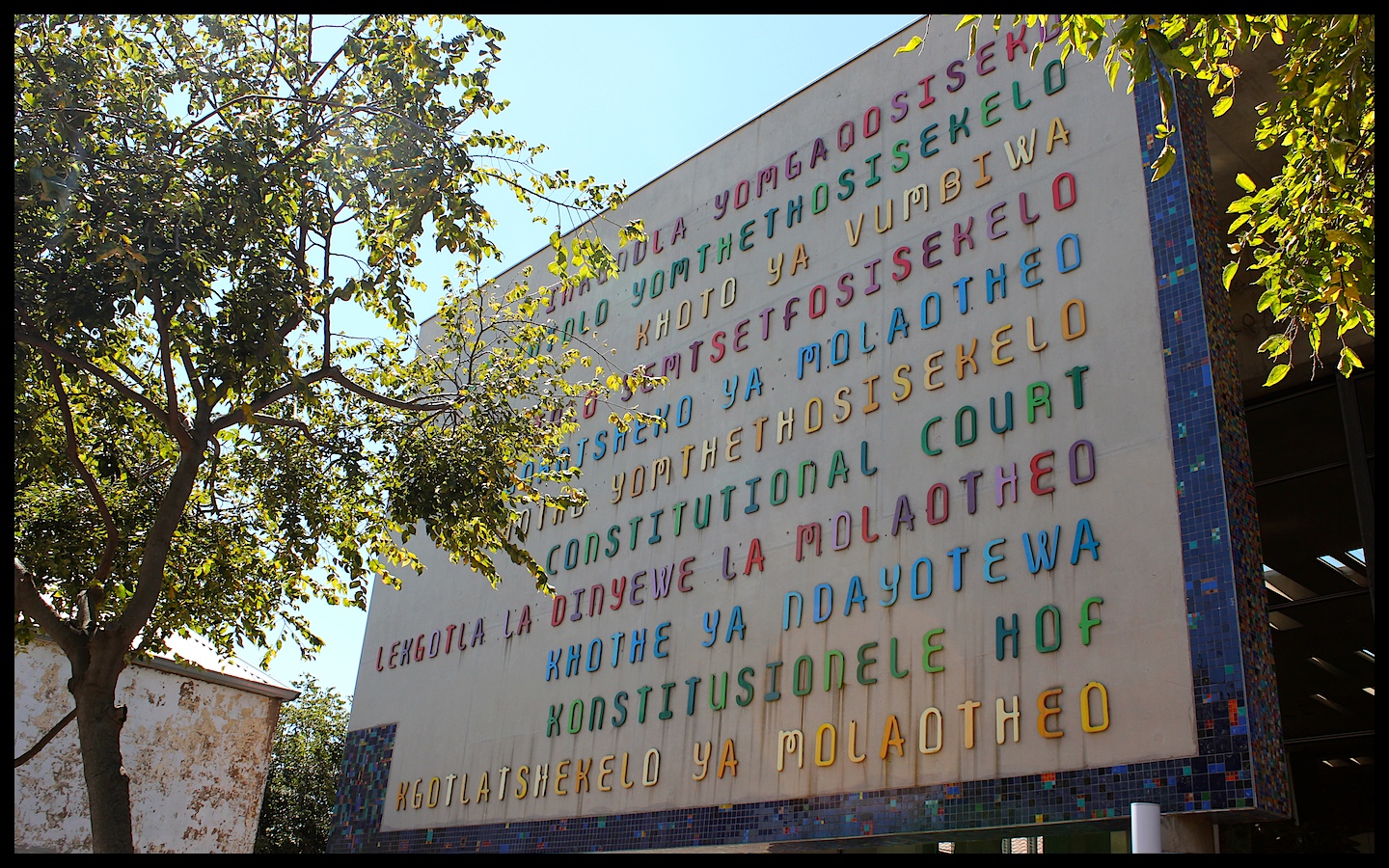
There are numerous examples of cases regarding different aspects of the right to education that have been subject to judicial scrutiny.
The aspect of the right to education most amenable to judicial scrutiny is non-discrimination. Cases of discrimination have long been adjudicated on in most courts. For example, in Brown v. Board of Education, the US Supreme Court found that racial segregation in schools was a violation of the equal protection clause of the US Constitution. The Supreme Court stated: 'We conclude that in the field of public education the doctrine of ‘separate but equal’ has no place. Separate educational facilities are inherently unequal...'
National courts have also heard cases on education financing, an important issue that profoundly affects the accessibility and quality of education. From 2005 to 2007 a public law charity in Indonesia brought a series of cases to the Constitutional Court claiming that a new law that sought to bring education spending up to 20% of the budget gradually and successive budgets that only allocated 7% and 8.1% to education, were in breach of the Constitution which provides that 20% of the national budget must be dedicated to the provision of education. The Court ruled that the law and both budget allocations were unconstitutional, striking down the law. It did not void the budget, however, it ordered that if any extra revenue became available, it must be allocated to education. Despite the reluctance of the Court to go further, spending on education in Indonesia had risen to 11.8% by 2008, no doubt due to the Court’s influence.
Related to education financing is the issue of privatisation and private schools. In a recent decision, the Supreme Court of Nepal issued a verdict demanding educational authorities devise reform programmes to regulate private schools – regulating fees, prohibiting the sale of unregistered and over-priced textbooks, and limiting the number of private schools gaining accreditation. In addition, the private sector cannot raise fees for three years as exorbitant fees charged by private providers of education are causing greater social and economic disparity between working and middle classes.
Regional mechanisms provide an important source of right to education case-law as states are held accountable above the national level. In Kjeldsen, Busk Madsen and Pedersen v. Denmark (1976), the European Court of Human Rights ruled that compulsory sex education classes, as prescribed by the national curriculum, do not amount to indoctrination, and therefore do not violate the 'right of parents to ensure such education and teaching in conformity with their own religious and philosophical convictions' (Article 2, Protocol 1 of the European Convention on Human Rights, 1950).
The African Commission on Human and People’s Rights in Rights Free Legal Assistance Group and Others v. Zaire (1995) found that a two-year-long closure of universities and secondary schools in Zaire (as it was at the time) due to the gross mismanagement of public finances, was a violation of the right to education (Article 17) as enumerated in the African Charter on Human and People’s Rights.
In Case 2137 Argentina (1978) the Inter-American Commission on Human Rights found a violation of the right to education (Article XII) as guaranteed by the American Declaration of the Rights of Man. In this case, the Argentine government issued a decree banning the activities of Jehovah’s Witnesses, as well prohibiting 'pupils professing the religion of Jehovah’s Witnesses' from sitting exams. The complainants also alleged that more than 300 school-age children were denied primary education. The Commission recommended that the Decree be repealed.
At the international level, the right to education has been made justiciable through the recent entry into force of complaints procedures for the International Covenant on Economic, Social and Cultural Rights and the Convention on the Rights of the Child. As these mechanisms become more established, a growing body of international case-law will emerge.
For more details about what aspects of the right to education have been subject to judicial and quasi-judicial scrutiny, see Coomans Justiciability of the Right to Education (2009), Report of the United Nations Special Rapporteur on the Right to Education: Justiciability and the Right to Education (2012), COHRE Litigating Economic, Social and Cultural Rights: a legal practitioners' dossier (2006), and Interights Litigating the Right to Education in Africa (2013).