By Eleanor , 29 October 2021

Between October 25-27th, the Fourth International Conference on the Safe Schools Declaration took place in Abuja, Nigeria.

The hybrid live and virtual conference was hosted by Nigeria in collaboration with Argentina, Norway, Spain, the African Union Commission, and the Global Coalition for Protecting Education under Attack (GCPEA), and it brought together high-level representatives from governments, international organizations, and civil society to promote global cooperation and strengthen coordination on implementing the Safe Schools Declaration.

The theme of this year’s conference was “Ensuring Safe Education for All: From Commitment to Practice”. In concrete, the Abuja Conference aimed to share good practice, encourage global cooperation and coordination, and identify actions governments can take to promote accountability for attacks on education. 
Currently, 112 States have signed the Safe Schools Declaration. This is major progress - by endorsing the Declaration, governments commit to a series of measures to ensure the continuation of education during armed conflict, and to prosecute those responsible for attacks, aid victims and survivors, and strengthen monitoring and reporting of attacks. 

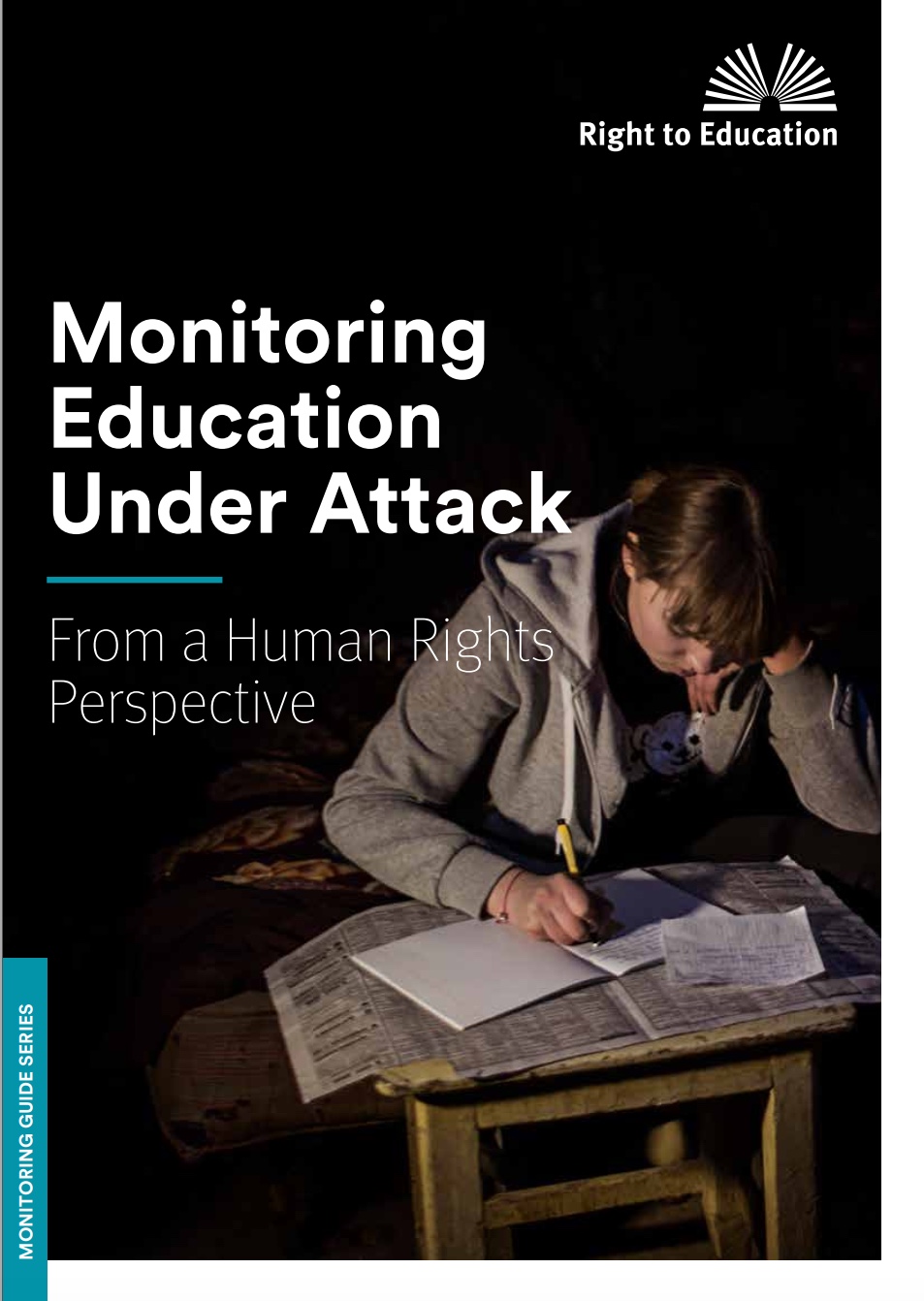
Civil society can play a fundamental role in ensuring compliance with these commitments. Our guide to monitoring education under attack from a human rights perspective is a vital tool for civil society, and can assist in monitoring and reporting on the right to education in conflict settings. 

Similarly, the sister publication to this guide 'Education Under Attack: A guidance note for journalists and photographers’ can help journalists in their efforts to document the impact of conflict on education. 

Also during the conference, 300 children launched a Children’s Manifesto which calls on world leaders to protect schools from attack, and made a series of demands including requesting they deny armies access to schools, and ensuring paths to schools are free of mines and explosives. 

By Eleanor , 19 October 2021

Early childhood, defined as the period from birth to eight years old, is a crucial time for the physical, cognitive, social, and emotional growth of children. Access to quality early childhood care and education (ECCE), therefore, can be vital in laying the foundations for children’s long-term development, well-being, learning, and health. Despite this, universal and equitable access to free, quality, and compulsory pre-primary education is one of the major education challenges. One out of two children does not receive pre-primary education.

By Eleanor , 29 September 2021

The Right to Education Initiative's 2020 Annual Report includes information about our strategy, our team and our supporters, and details activities and key achievements throughout the year. 

Our work would not be possible without the generous support of our donors, whose contribution is noted in this report.

By Eleanor , 31 August 2021
The Privatisation in Education and Human Rights Consortium (PEHRC) is looking for a Master's student / recent graduate interested in taking up a placement to support its work (on a rolling basis).
 
PEHRC is an informal network of national, regional and global organisations and individuals who collaborate to analyse and respond to the challenges posed by the rapid growth of private actors in education from a human rights perspective and propose alternatives.
By Eleanor , 18 August 2021

Changes in the media market after the end of the cold war, the development of new technologies and the hindering consequences of multiple economic crises have strengthened collaboration between journalists, photographers, videographers, and NGOs. Media reporting on conflict zones can play an enhanced role in helping civil society organisations (CSOs) to document attacks on education and CSO knowledge and connections could help journalists uncover important stories from the front lines. 

By Eleanor , 18 August 2021

This monitoring guide is designed to help civil society organisations monitor education under attack from a human rights perspective. It will guide you through:

I: the importance of monitoring

II: give you advice on what to look for and how to collect data

III: provide you with a list of indicators you might want to look at

IV: give recommendations on how and who to report to when identifying violations of the right to education.